
DESMOND launches major update to its type 2 diabetes education curriculum
By Alison Northern, Implementation Lead.
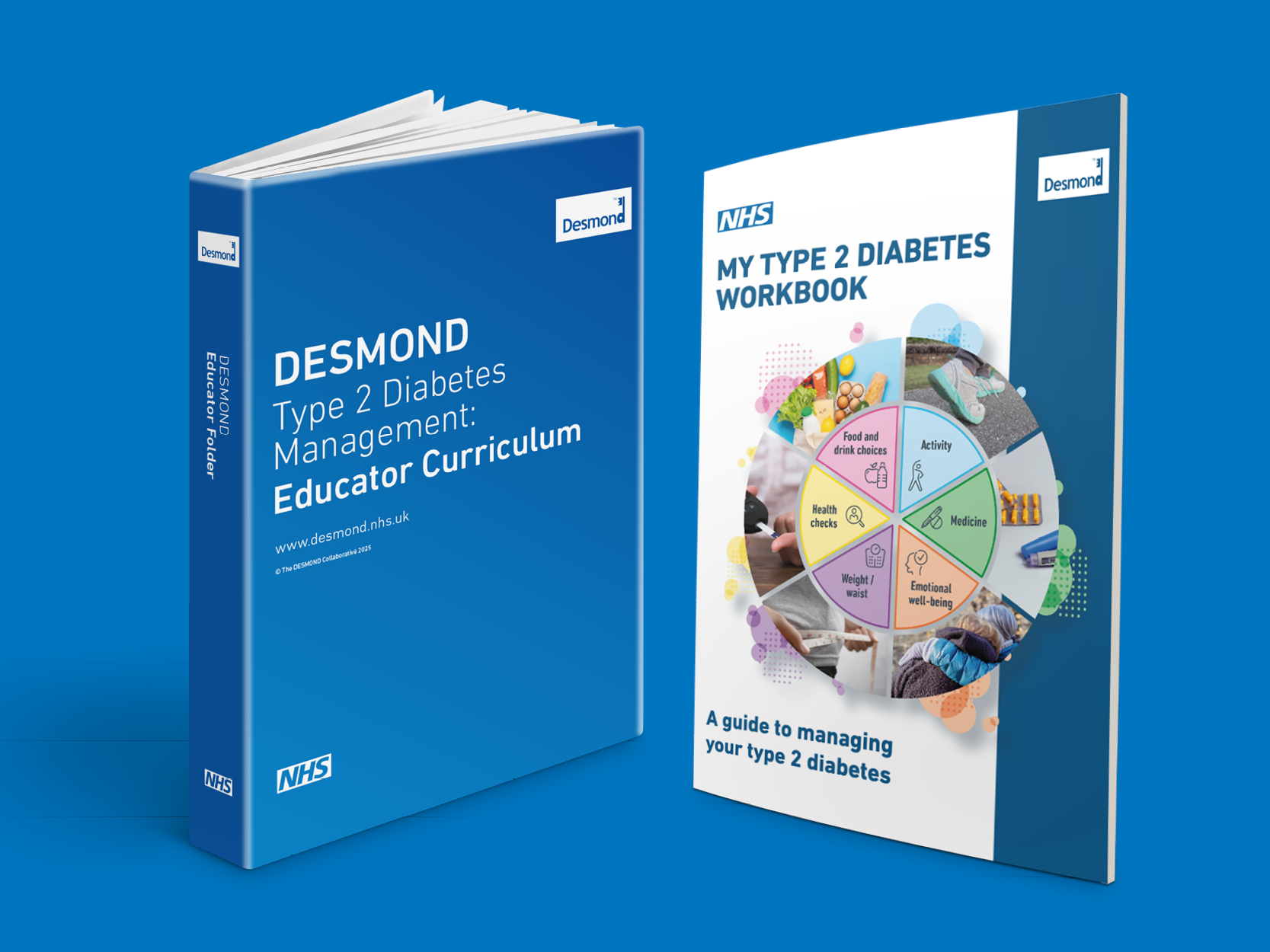
January 2026 marked a major milestone for the DESMOND (Diabetes Education and Self‑Management for Ongoing and Newly Diagnosed) Programme, with the launch of Version 7 of its nationally acclaimed type 2 diabetes education curriculum.
This is the most comprehensive update in the programme’s 20‑year history and reflects the significant advances in diabetes understanding, clinical guidance, behaviour‑change research, and inclusive health communication.
The update was led by the Leicester Diabetes Centre (LDC), drawing on more than 20 months of expert collaboration, piloting, Educator feedback, participant insights, and rigorous testing.
Why the curriculum needed updating
Alongside our five-year review rotation, our understanding of type 2 diabetes has evolved rapidly in recent years. Evidence relating to gut hormones, fat storage, remission, sleep, physical activity, and mental wellbeing has expanded, alongside major developments in treatment options such as GLP‑1 therapies.
At the same time, the growing use of virtual education, an increased focus on health literacy, and the need for more inclusive language highlighted the importance of refreshing the DESMOND curriculum. The aim was to ensure the curriculum remained clear, engaging, and aligned with the lives and needs of people living with type 2 diabetes today.
How the review process worked
The review began in mid-2024 and drew on a wide range of expertise, including:
Physical activity specialists
Dietitians and nutrition scientists
Behavioural science and psychology experts
Self-management interventionalists
Clinical academics
DESMOND Educators, trainers, and participants
International colleagues, including partners in Australia
The team worked within the established DESMOND delivery structure of six hours of content, delivered by two trained Educators; while exploring creative ways to modernise the learning experience.
Throughout 2025, the updated content was piloted multiple times. Sessions were observed, timings tested, and feedback gathered after each round. Only once the team was confident that the updates enhanced learning, maintained DESMOND’s facilitative, person-centred style, and fit within real‑world delivery did the programme move to final proofing, printing, and production.
What’s new in DESMOND version 7
The updated curriculum introduces significant enhancements across both content and delivery. Key changes include:
1. Modernised materials
Participants now receive:
a redesigned interactive workbook (replacing the previous handbook)
a refreshed two‑page MyHealthMap for tracking health information which enables them to track all blood and anthropometric data gathered during their annual care processes
an introduction to MyDESMOND (DESMOND’s digital platform) reflecting its increasing availability as a trusted, life-long support and educational resource
2. Expanded understanding of type 2 diabetes
The curriculum now explores four main physiological areas in more depth, supported by clearer explanations and activities. This includes updating and adding new content on:
Insulin resistance
Insulin insufficiency
Gut hormones
Body fat storage
3. Updated treatment and management content
A simplified section outlines how type 2 diabetes can be managed to lower blood glucose, supported by new visual tools. Emotional wellbeing is given greater prominence, allowing participants to explore strategies for support. And the main six management strategies now feature in a single visual to help participants really focus on what they are learning and what they want to change; these strategies are then highlighted throughout the workbook to again draw attention to what participant can do for greatest impact.
Medicines are explained in a clear, non‑clinical way, with an accompanying worksheet that participants can take home to support future conversations with healthcare teams.
4. Monitoring, remission and self‑management
Key updates include:
Removal of urine testing
Introduction of continuous glucose monitoring (CGM) for those who use it or are curious
Optional Time‑in‑Range (TIR) tracking
Clear, accessible explanation of remission criteria
5. Major revisions to dietary education
The dietary section has been redesigned to support practical, inclusive, and culturally relevant learning. Updates include:
Earlier discussion of weight management and its role in type 2 diabetes
Realistic portion‑size activities
A new carbohydrate activity replacing the old sugar‑cube game including fibre and protein messages
Refreshed activities on fat, and interpreting food labels
6. Cardiovascular health and long‑term implications
Participants explore:
Long‑term risks such as cardiovascular disease
Their own blood pressure and cholesterol values
Clearer explanations of heart‑protective medications
Updated content on foot health, retinal screening, kidney function and nerve health
7. New focus on diabetes distress and diabetes-related stigma
A dedicated section introduces diabetes distress using the PAID‑5 tool, reinforcing discussions around the care processes, and helping participants recognise their emotional experiences as valid and manageable. Stigma awareness is also present in the revised programme, aligning DESMOND to recent international recommendations to embed stigma discussions in diabetes education.
8. Physical activity and the “5Ss”
The physical activity content has been expanded to include the “5Ss”:
sitting, steps, strength, sweating and sleep.
Real‑life imagery and practical examples are now used to help participants connect the learning to their daily routines.
9. Strengthened behaviour change techniques
In line with intervention development and adaptation, the Behaviour Change Techniques Taxonomy (BCTTv1) was applied to ensure DESMOND’s active ingredients were still present in the new curriculum. The team followed a rigorous process of mapping the new curriculum onto key behavioural and learning theories.
Additionally, following Educator feedback it was identified that the goal setting section of the old curriculum felt rushed, and was therefore redesigned to include:
A case study
Updated worksheet
Structured partner work on goal setting and action planning
This reinforces DESMOND’s evidence‑based behaviour change approach.
A true team effort
Reflecting on the scale of the update, Alison Northern, Implementation Lead for DESMOND, shared:
“In my 20 years working on the DESMOND Programme, we have never undertaken a revision so large. We wanted to ensure we brought the newest evidence to life in a way that was meaningful for people with type 2 diabetes. I’m incredibly proud of what we have achieved.”
Michelle Hadjiconstantinou, DESMOND Academic and Psychology Lead, added:
“Maintaining the DESMOND philosophy around person-centredness and empowerment was essential. As a behavioural programme, DESMOND fosters a safe and supportive environment for self-exploration, shared learning and encouragement across the groups.””
Vicki Johnson, Lead Research Associate for Complex Interventions, highlighted:
“The new content brings our latest research (such as the 24-hour physical behaviours, also known as the ‘5Ss’) into everyday practice. Importantly, this is done in a meaningful way, so people living with type 2 diabetes can benefit. It’s been great to see the positive feedback we’ve had so far, especially around the new interactive workbook.”
Julia Burdon, DESMOND Training Lead, emphasised the next phase:
“Now the hard work turns to supporting over 800 existing Educators across more than 100 organisations to deliver the new curriculum with confidence. We hope they love the changes as much as we do.”
Nicole Boultbee, Patient Education Lead, Kingston and Richmond NHS Foundation Trust, who has started delivering the new curriculum, explains:
“Delivering the new DESMOND V7 curriculum has been a great experience; the shift toward Diabetes Distress and wellbeing shows that this update isn’t just about better tech but also about better empathy and accessibility. There is more direct face-to-face engagement with participants, along with simplifying complex concepts like GLP-1 hormones, medications and CGM’s leaving the participants now with a more confident understanding of their health”.
Looking ahead
The new DESMOND curriculum represents a significant step forward; more inclusive, more practical, more engaging, and more closely aligned with modern diabetes evidence and care.
By integrating cutting‑edge research, real‑world educator insight and a renewed focus on both emotional and physical wellbeing, DESMOND version 7 equips people with type 2 diabetes with the tools, confidence, and understanding needed to make meaningful changes to their health.
To find out more or enquire about offering DESMOND in your area, contact the team at:
uhl-tr.desmondnationalprogramme@nhs.net